English| EUR
Suggested for you
More currencies
Choose a language
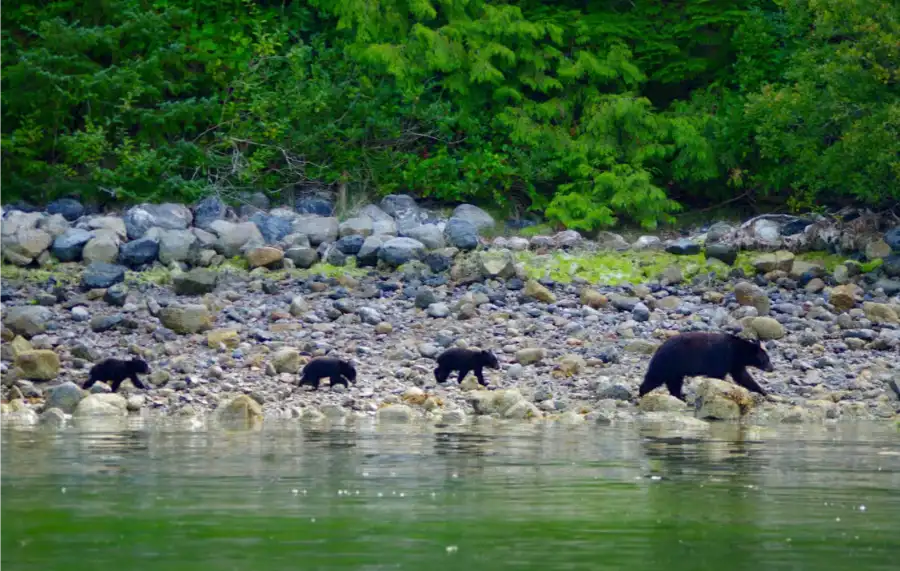
Black bears emerge along Tofino's intertidal zones from mid-spring through late fall, foraging for crabs, sedges, and beached salmon during low tide. The season stretches across seven months, but peak activity concentrates in two narrow windows when food abundance and bear behavior align. Knowing which weeks deliver the highest sighting rates—and which tidal cycles expose the richest feeding grounds—turns a speculative outing into a reliable encounter.
Quick answer
The Tofino bear watching season runs from April through October, with peak viewing in late April through June and again in September through mid-October. Spring brings bears to the shoreline for sedge grass, crabs, and emerging intertidal life, while fall coincides with salmon runs and pre-hibernation foraging. Tours schedule departures around daily low tides when bears move onto exposed mudflats and rocky shores, typically between 8:00 AM and 5:00 PM.
A coastal black bear can consume up to twenty thousand calories in a single autumn day, and Tofino's intertidal margins deliver that bounty in concentrated, predictable form. The result is one of British Columbia's most reliable bear viewing corridors, where sightings occur not by luck but by understanding the seasonal rhythms that bring bears out of the forest and onto the shore. The tofino bear watching season opens in April as snow recedes from higher elevations and bears descend to the coast in search of protein-rich sedge shoots and overwintered crabs. May and June sustain high activity as intertidal vegetation peaks and nursing sows bring cubs to forage in open view. Summer sees a lull—berries ripen inland, and bears retreat to shadier terrain. By September the pattern reverses: salmon enter coastal streams, and bears return to the shoreline to intercept spawning runs and scavenge carcasses. October extends the window as bears enter hyperphagia, the frantic pre-hibernation feeding phase that can keep them active for sixteen hours a day. Tide tables govern encounter rates as much as the calendar does. A minus tide exposes broad flats thick with rock crabs and burrowing clams; a high tide pushes bears back into the tree line where visibility drops. Tour operators consult daily predictions to time departures for the two-hour window before and after low slack, when feeding bears work methodically across the revealed substrate. Weather plays a secondary role—cloud cover and light rain rarely deter foraging, and overcast conditions can actually improve photography by softening contrast. The shoulder months—late April and late October—offer the season's quietest access, with fewer vessels on the water and bears habituated to minimal human presence. Mid-season departures between June and September fill quickly but deliver higher cub counts and extended daylight. All tours depart from Tofino harbor, and the intertidal zones lie within Clayoquot Sound, a UNESCO Biosphere Reserve where bear density remains stable year over year. No walk-in viewing exists; all bear watching is conducted via licensed boat-based operators who maintain the buffer distances that keep encounters safe and predictable.
“A coastal black bear can consume up to twenty thousand calories in a single autumn day, and Tofino's intertidal margins deliver that bounty in concentrated, predictable form.”
The bear watching season in Tofino typically runs from April through October, when black bears emerge from the forest to forage for rock crabs and other marine life along the shoreline. Success depends on the daily tidal cycle, as bears are most active on the intertidal flats during low tide.
Cool, 8°C to 14°C
Bears emerge after hibernation and feed on the shore.
Mild, 12°C to 19°C
Consistent sightings as cubs accompany mothers on the coastline.
Cool, 9°C to 15°C
Bears continue to forage actively before returning to the forest.
Variable
Tours strictly follow low tide to ensure bears are visible on the beaches.
Verdict: The best opportunity for viewing occurs between April and October, specifically during the daily low tide windows when bears are foraging on the shoreline.
Tofino bear watching tour information centers operate daily throughout the week. These hours support the recommended arrival window for coordinating scheduled tours.
Access to bear watching in Tofino is available at no cost for public shoreline observation. However, observing bears in their natural habitat requires hiring professional private tour operators, who charge fees for vessel transportation and guide services.
Verdict: While regional access is free, visitors pay varying fees to private tour operators depending on the specific tour company and vessel capacity.
Prepare for variable coastal weather and secure your tour operator booking well ahead of your visit.
Everything you need to know about tofino bear watching season
The peak tofino bear watching season typically runs from May through October when black bears emerge to forage. Planning your visit during these months offers the highest probability of sighting these animals in their natural habitat. Sightings are most consistent when guided by local experts familiar with the coastal wilderness.
Yes, August is a prime month for the tofino bear watching season as black bears frequent the shoreline to feed on rock crabs and other intertidal life. Summer tours provide extended daylight hours for wildlife photography and observation from the water. Please ensure you book your spot with a licensed operator well in advance.
There is no entrance fee for bear watching, as the activity takes place in public marine areas. While the coastal territory is free to access, all bear viewing is conducted via paid private tour operators who provide the necessary boats and guides. These fees cover the cost of professional vessel operation and marine expertise.
Tours are scheduled around daily low tides, which is when the tofino bear watching season is most active. Bears come down to the shoreline to forage during low tide, making this the most critical factor for successful sightings. Your departure time will shift daily to align with these natural marine cycles.
Yes, these wildlife excursions are generally family-friendly and provide a safe way for children to see animals in the wild. Most operators have specific safety protocols and equipment suitable for passengers of all ages. We recommend checking with your chosen tour company regarding their specific age requirements and life jacket availability.
Tofino tour operators typically maintain consistent availability throughout the week to accommodate visitors. You can plan your excursion any day, as the facilities are open from 08:00 to 18:00. This daily schedule allows for flexibility when coordinating with tide-dependent departures.
When preparing for your outing, dress in warm layers to account for the cool marine air while on the water. Bring a camera with a telephoto lens to capture images from the safety of your vessel. Additionally, bring rain gear and sunglasses to ensure you remain comfortable during the entire duration of your tour.
Boat and Cruiser Bear Tours
Read more Tickets & toursTofino Bear Watching Kayak Tours
Read more GuideBlack Bear Watching in Tofino
Read more GuideWhere to See Bears in Tofino
Read more GuideBear Safety and FAQ
Read more Tickets & toursZodiac Bear Watching Tours
Read more Tickets & toursWhale and Bear Watching Combo Tours
Read more