English| EUR
Suggested for you
More currencies
Choose a language
Bear encounters happen in Tofino's coastal rainforests, especially during salmon season and berry months. Knowing the correct response sequence—and the mistakes that escalate risk—turns a tense moment into a safe passage. This guide walks you through the verified protocol used across British Columbia's backcountry.
Quick answer
If you see a bear in Canada, stop immediately, stay calm, and assess the situation without making sudden movements. Back away slowly while facing the bear, speaking in a low, calm voice. Never run, climb a tree, or make direct eye contact. If the bear approaches, make yourself appear larger, continue backing away, and prepare bear spray if you carry it. Black bears typically retreat when given space; grizzlies require more caution and a slower withdrawal.
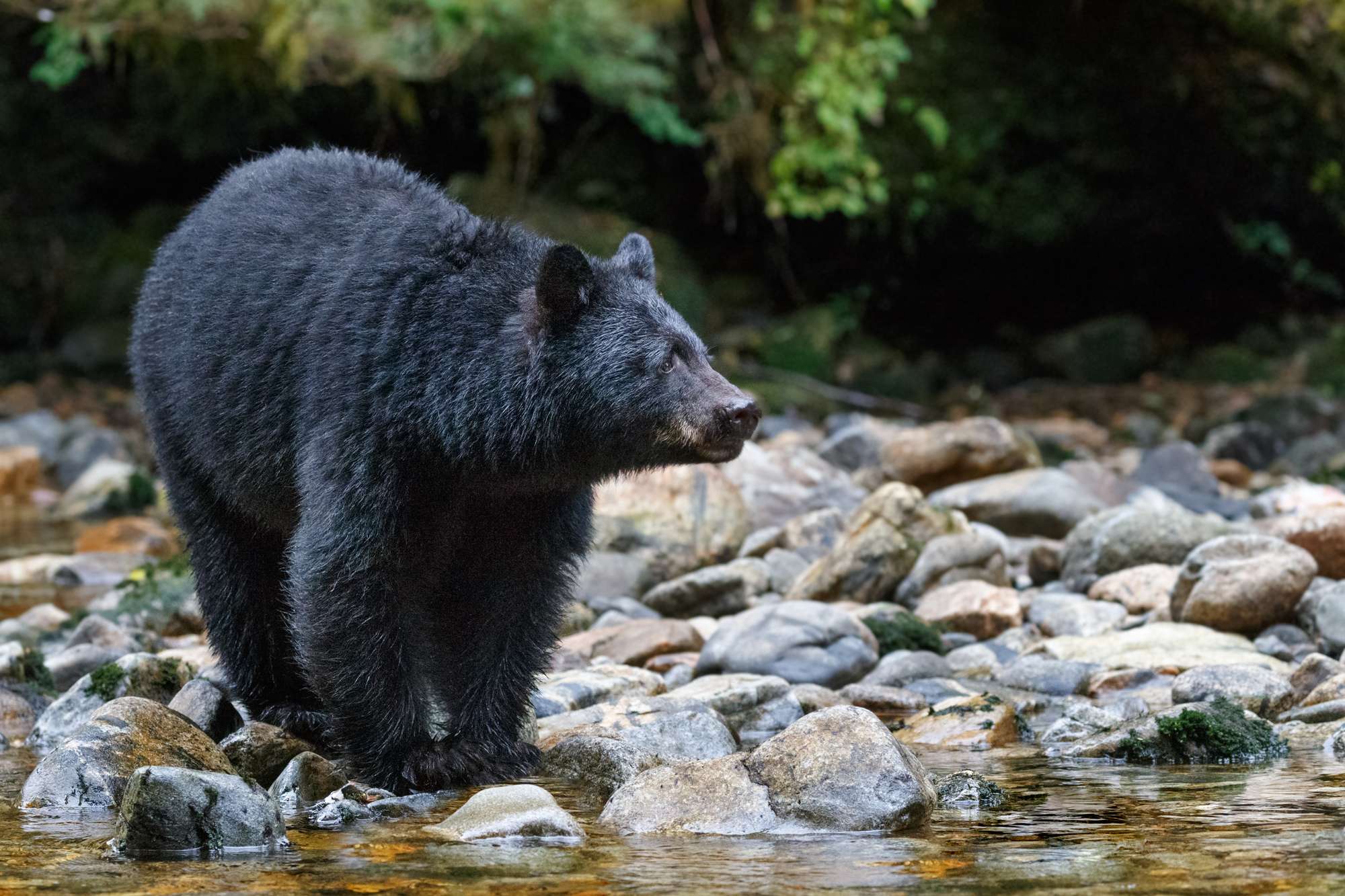
Black bears outnumber humans five to one in the old-growth corridors around Tofino, and coastal grizzlies patrol salmon streams from late summer through October. Most sightings end with the bear moving off into the forest, but the window between detection and safe separation depends entirely on your immediate response. What to do if you see a bear Canada protocols start with a single rule: stop moving. Running triggers a chase response in both black bears and grizzlies, and even fit adults cannot outpace a bear over broken ground. Once you have stopped, identify the species if possible—black bears have straight facial profiles and no shoulder hump, while grizzlies show a pronounced hump and dish-shaped faces. Your next steps differ slightly depending on which you are facing. Back away at a steady, slow pace, keeping your eyes on the bear but avoiding a direct stare, which reads as a challenge. Speak in a calm, low tone to identify yourself as human; high-pitched voices or silence can confuse the animal. If the bear stands on its hind legs, it is gathering information, not preparing to charge. Continue your retreat. If it huffs, clacks its jaws, or swats the ground, you are too close—these are stress signals, not aggression. Increase the distance without turning your back. Bear behavior shifts with context. A sow with cubs defends a much larger radius than a solitary forager. Bears on a carcass or fresh kill do not retreat—back away immediately and take a wide detour. Encounters at dawn or dusk, when bears are most active, require extra caution; reduced light means both you and the bear have less reaction time. If you are on a narrow trail with poor sightlines, make noise as you hike—talking, clapping, or using bear bells reduces surprise encounters by ninety percent. Bear spray works at ranges up to seven meters and remains the most effective deterrent short of a firearm, but it requires practice. Hold the canister at hip height, aim slightly downward, and deploy in two-second bursts when the bear closes to within ten meters. Wind direction matters; cross-breezes or headwinds reduce effective range. After any encounter, report the location and behavior to BC Parks or the local conservation office so trail warnings can be posted for other hikers.
“A bear standing on its hind legs is gathering information, not preparing to charge—continue your retreat without turning your back.”
Bear encounters in Tofino's coastal forests require calm, deliberate responses that protect both you and the animal. Following this protocol reduces risk and ensures the encounter ends safely.
Halt immediately when you spot a bear. Do not run—bears can reach 55 km/h and may chase fleeing targets. Stand still and locate the bear's position and behavior.
Black bears have straight faces and tall ears; grizzlies have dish-shaped profiles and shoulder humps. Black bears dominate Vancouver Island, but knowing the difference shapes your response—grizzlies require playing dead if attacked, black bears require fighting back.
Speak in a low, steady voice and wave your arms slowly at your sides. Avoid direct eye contact, which bears read as aggression. Give the bear space to identify you as human, not prey.
Take small, deliberate steps backward and to the side, maintaining visual contact without staring. Never turn your back or crouch down. If the bear approaches, stop retreating and hold your ground.
Unholster your bear spray and remove the safety clip when the bear closes to 10–15 meters. Aim low—the spray cloud should hit the bear's face as it enters the 7-meter range. Deploy in short bursts, not a continuous stream.
Wait until the bear is within 7 meters before spraying. Most charges are bluffs; the bear will veer off. If it continues into spray range, saturate its face and eyes, then move away laterally once it retreats.
Black bears in Tofino are most active during dawn and dusk, making these periods the primary times to exercise heightened awareness. Adjusting your outdoor schedule to avoid these specific hours reduces the risk of encountering a bear.
Cool, 8°C to 15°C
Bears emerge from hibernation to forage for sedge in intertidal zones during low tide. Increased monitoring is advised during these months.
Warm, 15°C to 20°C
Bears frequent the shoreline to eat crabs and mussels. Activity levels peak at dawn and dusk when temperatures are lower.
Cool and rainy, 7°C to 12°C
Bears forage intensively before winter denning. Interactions are more likely during early morning and late evening.
Verdict: The best arrival window is 00:00–23:59, provided you intentionally plan activities outside of dawn and dusk to minimize the risk of bear encounters.
Carry the right gear to reduce risk and respond effectively if you encounter a bear in Tofino's backcountry.
Access to public bear awareness education and information regarding safety in Tofino, British Columbia, is provided at no cost. There are no admission fees required to access these public resources.
Verdict: A typical adult pays 0 CAD to access bear safety information, as these educational resources are provided free of charge.
Information regarding bear safety in public areas of Tofino is accessible at all times. Educational resources remain available for review throughout the entire week.
Everything you need to know about what to do if you see a bear canada
If you encounter a bear, remain calm, do not run, and slowly back away while keeping the animal in sight. Understanding what to do if you see a bear Canada helps ensure both your safety and the well-being of the wildlife. Always give the bear plenty of space and never attempt to feed or approach it. Professional bear watching tours are the safest way to observe these animals, as experienced guides know what to do if you see a bear Canada and provide secure viewing platforms. These tours allow you to see bears in their natural habitat without risking a dangerous land-based encounter. To minimize risk, avoid being outdoors during dawn and dusk, as bears are most active during these times. Knowing when these animals are active is just as important as knowing what to do if you see a bear Canada. There is 0 CAD entrance fee to public areas where bear awareness education is provided. Information on wildlife safety is free to all visitors. Resources from WildSafeBC offer comprehensive guidelines on coexisting with wildlife throughout the province. Following these expert recommendations is essential for any traveler venturing into bear country. While bears inhabit the surrounding coastal rainforests, they generally avoid high-traffic urban zones. However, visitors should always remain alert and practice proper food storage to avoid attracting animals to human spaces.
Boat and Cruiser Bear Tours
Read more Tickets & toursTofino Bear Watching Kayak Tours
Read more GuideBlack Bear Watching in Tofino
Read more GuideWhere to See Bears in Tofino
Read more GuideTofino Bear Watching Season
Read more Tickets & toursZodiac Bear Watching Tours
Read more Tickets & toursWhale and Bear Watching Combo Tours
Read more